Best National Parks to See the Big Five in Tanzania | Ultimate Safari Guide
Home / Our Blog
Best National Parks to See the Big Five in Tanzania
Tanzania is renowned worldwide for its abundant wildlife and spectacular landscapes. Among the most sought-after experiences is seeing the Big Five—lions, leopards, elephants, rhinos, and buffalos—in their natural habitat. For first-time and seasoned safari-goers alike, knowing which national parks offer the best opportunities to encounter these iconic animals is crucial for planning the perfect safari.
This guide explores the top national parks in Tanzania to see the Big Five, highlights what makes each park unique, and offers tips for maximizing your wildlife sightings.
What Makes the Big Five Special
Historical significance
The term “Big Five” was originally coined by big-game hunters to describe the most dangerous animals to hunt on foot. Today, it symbolizes wildlife prestige and adventure.
Wildlife appeal
Each species offers a unique experience:
Lion: The “king of beasts” and a thrilling predator to watch.
Leopard: Elusive and solitary, best seen in the trees.
Elephant: Majestic giants that roam in large herds.
Rhino: Critically endangered, often requiring keen spotting skills.
Buffalo: Strong, social animals that add drama to the savannah.
Safari experience
Seeing the Big Five is a highlight for photographers, families, honeymooners, and wildlife enthusiasts.
Tarangire National Park
Overview
Tarangire National Park is famous for its large elephant populations and iconic baobab trees. It is less crowded than other parks, offering a peaceful safari experience.
Big Five spotting
Elephants: Large herds are common year-round.
Lions: Often found near watering holes.
Buffalo: Frequently grazing across the plains.
Leopards: More elusive; spotted occasionally in trees or bushes.
Rhinos: Rare, but possible in certain areas.
Highlights
Seasonal swamps attract diverse wildlife.
Great for bird watchers with over 500 bird species.
Perfect for early morning and late afternoon game drives.
Ngorongoro Crater
Overview
The Ngorongoro Crater, a UNESCO World Heritage Site, is a unique natural amphitheater with high concentrations of wildlife in a relatively small area.
Big Five spotting
Lions: Common, often observed hunting in the grasslands.
Elephants: Roaming the crater floor in small family groups.
Buffalo: Large herds grazing peacefully.
Leopards: Usually elusive; best seen in rocky outcrops.
Rhinos: Critically endangered black rhinos live on the crater floor.
Highlights
Easy wildlife viewing due to the enclosed crater ecosystem.
Scenic viewpoints along the rim.
Excellent for photographers and first-time safari-goers.
Serengeti National Park
Overview
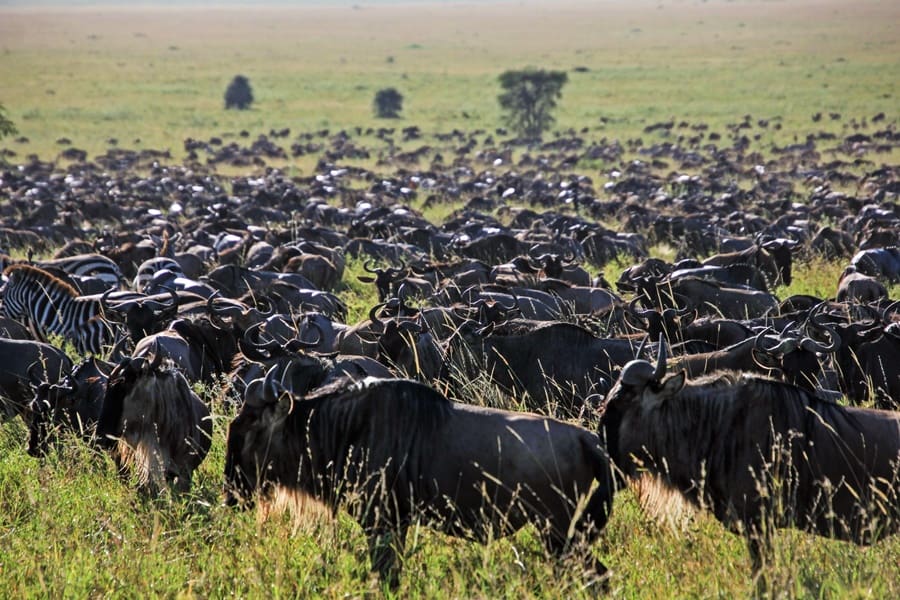
The Serengeti is Tanzania’s most famous park, celebrated for its vast savannahs and the Great Migration of wildebeest and zebras.
Big Five spotting
Lions: Frequently seen; prides are scattered throughout the plains.
Leopards: Often found in trees and rocky kopjes.
Elephants: Usually in herds near river valleys and woodlands.
Buffalo: Abundant in central and southern Serengeti.
Rhinos: Rare, but occasionally sighted in protected areas.
Highlights
Endless photographic opportunities.
Seasonal migration adds dynamic wildlife viewing.
Luxury lodges and camps offer comfort for extended safaris.
Lake Manyara National Park
Overview
Lake Manyara is a small but diverse park, famous for its tree-climbing lions and flamingo-filled lake.
Big Five spotting
Lions: Unique tree-climbing lions offer a rare experience.
Elephants: Common near the lake and woodland areas.
Buffalo: Present in small herds.
Leopards: Very elusive but possible in dense forest areas.
Rhinos: Not resident here; must be visited in other parks.
Highlights
Scenic combination of forest, lake, and savannah.
Excellent for bird enthusiasts.
Shorter drives allow full-day exploration.
Selous Game Reserve (Nyerere National Park)
Overview
Selous, now officially Nyerere National Park, is one of Tanzania’s largest protected areas, offering remote and pristine wilderness.
Big Five spotting
Lions: Present but less predictable than in Serengeti.
Elephants: Large numbers roam freely.
Buffalo: Herds often seen near rivers.
Leopards: Rare but present.
Rhinos: Critically endangered black rhinos are in protected zones.
Highlights
Boat safaris for aquatic wildlife and hippo spotting.
Less crowded; ideal for adventurous travelers.
Remote experience, perfect for multi-day safaris.
Tips for Maximizing Big Five Sightings
Choose the right season
Dry season (June–October) concentrates wildlife near water sources.
Wet season (November–May) offers lush scenery and fewer tourists but wildlife can be dispersed.
Hire a skilled guide
Experienced guides know animal behaviors and the best spots for sightings.
Early morning and late afternoon drives
Wildlife is most active during cooler hours.
Be patient and observant
Some species, like leopards and rhinos, require careful spotting and patience.
Use binoculars and cameras
Essential for detailed wildlife observation and photography.
Combining Parks for First-Time Visitors
Suggested 5–7 day safari
Tarangire: 1 day
Ngorongoro Crater: 1 day
Serengeti: 2–3 days
Optional: Lake Manyara for diversity
Benefits
Maximizes Big Five viewing chances.
Offers a mix of landscapes and experiences.
Balanced travel distances and accommodations.
Conservation and Ethical Considerations
Responsible wildlife viewing
Keep a safe distance from animals.
Avoid disturbing natural behaviors.
Supporting local communities
Choosing ethical tour operators helps support guides, porters, and local communities.
Protecting habitats
Follow park rules and avoid littering or off-road driving.
Conclusion
Tanzania offers some of the best national parks in the world to see the Big Five, including Tarangire, Ngorongoro, Serengeti, Lake Manyara, and Selous (Nyerere). Each park provides a unique combination of wildlife, landscapes, and experiences.
By choosing the right parks, planning according to season, hiring experienced guides, and practicing responsible tourism, travelers can maximize their chances of spotting the Big Five while enjoying an unforgettable safari adventure.
For first-time visitors, combining these parks into a 5–7 day itinerary ensures a rich and diverse experience with ample opportunities to see lions, leopards, elephants, rhinos, and buffalos in their natural habitat.
Do you have any Question?
Feel free to ask any question or any help, We are available 24hrs.